

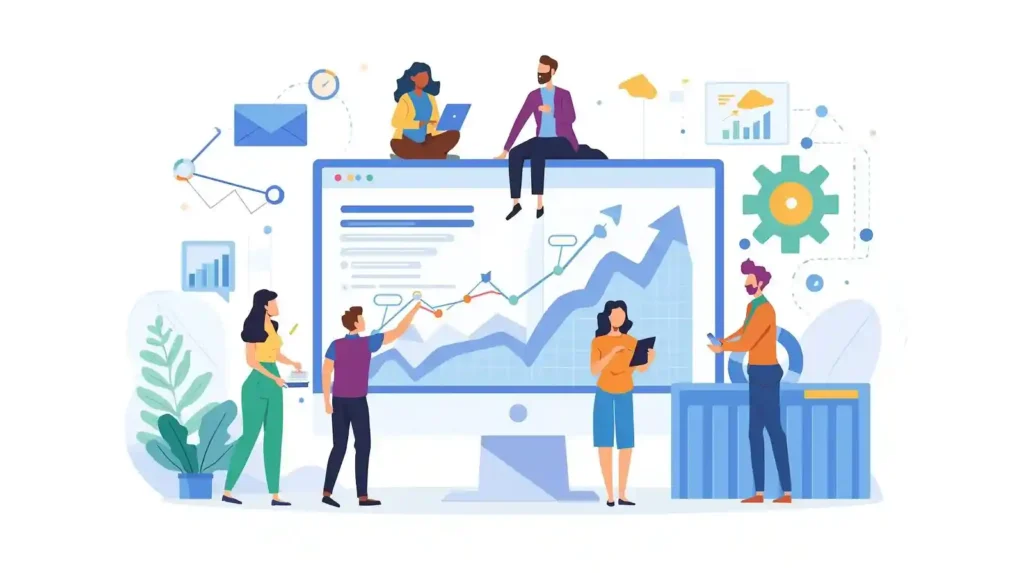
Nowadays, a website is not simply an online brochure but your main forte to amplify your growth, gain trust, and attract customers. For a startup, a beautifully designed website is not a luxury but a must- have. It acts as a salesperson on call day and night, a brand ambassador, and the main marketing platform. But with so much contradictory advice around, how do you come up with a startup website that is a hit? This in- depth guide covers all the necessary tactics you’ll need, right from the initial planning to post, launch optimization, so that your online presence is formed on a strong ground of success.
Phase 1: The Blueprint for Success - Strategy & Planning
Before you even consider design or code, a clear strategy must come first. It is quite common for startups to get so excited that they go straight into development without laying down a solid plan first. This usually results in the creation of a website that doesn’t really serve the business goals.
Figure out the primary goal of your website. Do you want to:
- Get leads for your sales team?
- Sell products directly through an online store?
- Create a community around your brand?
- Present yourself as a thought leader in the industry?
Depending on your answer, it will influence the decisions you make, be it the layout, content or technology used. Setting a goal is an account of the thing an individual has done such as their own star or beacon guiding their efforts & all elements of their website towards leaving the same trail.
Know Your Target Audience
You can not make a site that appeals to everyone. Instead, focus on creating a very detailed customer persona. Get a good hold of their problems, what makes them tick & what they want in a solution. When you know your audience well enough, you can tailor your message, design & user experience to their particular needs.
Phase 2: Building the Foundation - Design and User Experience
Once the strategy is crystal clear, the next thing to do is resort to design and user experience (UX). This is pretty much the moment when you create a personality for your brand and make a great first impression.
Simplicity and Clarity are Key
Generally, minimalism is the first and foremost choice of most designers and developers when it comes to web design. A simple and clean layout with clear communication will definitely have a greater impact than a messy and confusing design. Strategically use white space, don’t jump from one color to another and choose easily readable fonts. Visitors should be able to understand what your company is and why it matters just by a glance at your website. So, let your unique value proposition be the leading element.
Prioritize User-Centric Design
A great website is fundamentally designed with the user in mind, which means:
Intuitive Navigation: It should be easy and natural for the visitors to locate the information they seek with hardly any effort.
Fast Loading Speed: Nowadays, people expect everything immediately. Thus, if your web pages load slowly, basically, you are signing your own death warrant. Try to keep the loading time less than 3 seconds.
Mobile Responsiveness: Since more than half of all web traffic is from mobile devices, it is a matter of survival that your site not only looks good but also works well on any screen size.
Effective Call-to-Action (CTA) Buttons
Your site ought to be a roadmap that leads users to a particular action. It doesn’t matter if it’s “Sign Up Now, ” “Request a Demo, ” or “Buy Now, ” your CTAs have to be vividly clear, extremely persuasive, and very well positioned on the page. Employ words based on action which evoke the feeling of urgency and at the same time, allow the users to easily take the next step.
Phase 3: The Launchpad - Development and SEO
This is the point where your ideas really start to take shape. However, always keep in mind the golden rule of start-ups: done is better than perfect.
Launch Quickly and Iterate
Apart from other things, Y Combinator advises the most valuable thing to be launching your product immediately. Don’t hold off till you have the “perfect” website. Construct a Minimum Viable Product (MVP) which addresses a main issue of your users, release it, and then use feedback from the real world to do changes and make it better.
SEO: Your Long-Term Growth Engine
Search Engine Optimization (SEO) is vital and should be a top priority for any business. SEO involves the entire process of refining your website to get higher in the search engines results pages and thus increasing the number of visitors to your website who land there without paying advertising and are genuinely interested in your solution.
The main SEO techniques are:
Keyword Research: Discover the words and phrases your potential customers are using when they do their research.
On Page SEO: Make sure your page titles, meta descriptions & content reflect the keywords you want to rank for.
Content Creation: Keep on throwing out fresh, good & useful content that satisfies the needs of your audience.
Phase 4: After the Launch - Measurement & Optimization
Launching your website is just the beginning. The real work starts now. To build a website that truly wins, you must continuously measure, learn & optimize.
Track Key Metrics
Enable your site with analytics tools like Google Analytics for monitoring key metrics e.g:
Traffic – Number of users visiting your site.
Conversion Rate – What fraction of users are performing the desired action?
Bounce Rate – Percentage of users leaving your site after only one page view
These metrics will tell you which aspects of your site function well and which do not.
Collect User Feedback
Your users are the most genuine source of what is right. Through surveys, feedback forms, and user testing find out their experience and locate the areas that need changes. Listen to them and let their opinions guide you in making data- driven decisions.
Conclusion: Your Website is a Journey, Not a Destination
Launching a startup website is not the same as a one time project. It is a step on the road to continuous improvement. If you start with a clear strategy, focus on users, launch fast & constantly optimize, you will be able to create a strong online presence that will help you grow & get your startup on the right track to success. Think of your website as a living being. Take care of it, pay attention to your users and keep on improving it. Most probably, the rewards for your hard work will be enough to make you happy.
FAQs
It focuses on clear messaging and fast validation, designed to quickly attract users, test ideas, and drive meaningful conversions early on.
A homepage, product page, pricing, about, and contact page are key to explain value clearly and guide visitors toward taking action.
Yes, SEO builds long-term organic traffic, improves visibility in search engines, and lowers customer acquisition costs over time.
Most startups use platforms like Wix or WordPress for faster setup and flexibility.
Use a strong value proposition, clear calls-to-action, social proof, simple design, and ongoing testing to increase engagement and results.