
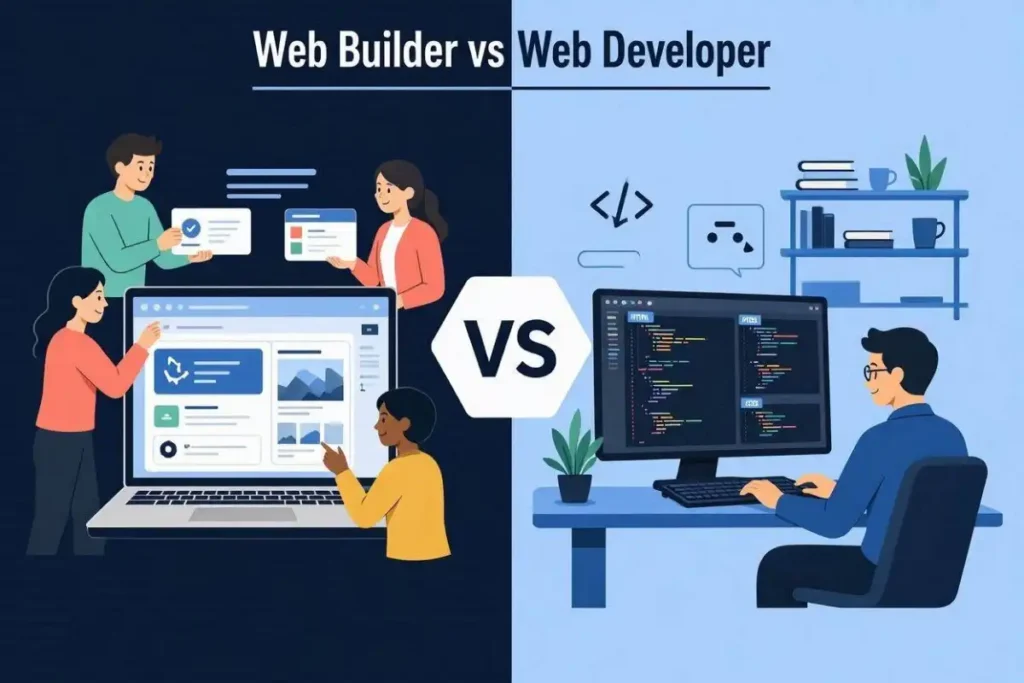
A website looks easy from the outside. Open a builder. Pick a design. Add a logo. Press publish. That is the picture many people see at first. After a few days things often change. Pages load slowly. Small edits take longer than expected. Some features cannot be added. The simple start becomes a little confusing. That moment usually makes people stop and think about hiring a developer instead. It is not always a clear choice. Both options have good sides and weak sides. The right answer depends on the business and the plans for the future.
Many small business owners begin with a website builder because it feels safe. The monthly cost is easy to understand. The designs look clean. There is no need to learn coding. Everything sits in one place. That comfort matters when time is short. Still there is something that becomes clear after a while. A business changes faster than a template. New pages appear. New services arrive. A booking system might be needed. A customer area might become important. Little changes slowly turn into bigger ones.
That is where companies like Prodigy Marketing Agency in Dubai often step into the conversation. A website is not only about looking nice. It should help people trust the business. It should load fast. It should work well on every screen. It should be easy for search engines to understand. Those small details are easy to miss during the first build. They become much harder to ignore later.
What does a website builder actually do?
A website builder gives ready made tools for making a website without coding. Pages can be moved around by dragging blocks. Pictures can be changed with a few clicks. Colors and fonts are simple to update. For someone opening a first business this feels exciting. A bakery. A salon. A local shop. All of them can have a website running in one afternoon. That speed is hard to ignore.
There is another side though. Many websites made with the same builder start looking similar. Visitors may not notice at first. Regular internet users sometimes do. It gives a feeling that something is familiar even when they cannot explain why. A business trying to stand out may find that a little disappointing.
What does a developer bring that a builder cannot?
A developer starts with the business instead of a template. Every page can be planned for a reason. Buttons can appear where visitors naturally expect them. Forms can connect with other business tools. Extra features can be built instead of searched for. The website grows around the business instead of asking the business to fit inside a ready made design.
This takes longer. It usually costs more. That part is true. Still many people notice the difference after using the site for months instead of days. Small updates become easier because the website was built with future changes in mind. That long view often saves effort later.
Is a website builder enough for a small business?
Sometimes yes. A local business with only a few services may not need anything complex. A simple contact page. Business hours. A map. A gallery. Those things work well on many builders. There is nothing wrong with choosing the simple path when the needs are also simple.
The decision becomes harder when growth starts. More visitors arrive. More products appear. Online payments become important. Better search visibility becomes a goal. At that point the limits of a builder may begin showing. It is not because the builder failed. It simply reached the job it was designed to do.
Why do some businesses switch later?
This happens more often than expected. The first website solves the first problem. Being online. The second website solves the next problem. Growing without limits. There is a quiet difference between those two goals. One is about presence. The other is about performance.
A restaurant is a good example. At first only a menu and phone number are needed. Months later customers ask for online booking, Gift cards, Loyalty rewards & Event pages. Suddenly the old setup feels crowded. Instead of adding another shortcut the owner decides to rebuild everything properly.
That story repeats in many industries. Fitness centers. Real estate offices. Clinics. Small stores. The website that felt perfect in the beginning slowly becomes too small for the business.
Does hiring a developer always mean better quality?
Not always. Skill matters. Experience matters. Good planning matters even more. A poor developer can create problems that are harder to fix than a limited builder. That is why choosing the right team is just as important as choosing the right method.
Some agencies spend time asking questions before writing any code. That usually feels like a good sign. They ask about customers. Goals. Future plans. Search traffic. Mobile users. Those conversations shape the website before the first page is even designed. That thoughtful start often makes the finished result feel much more natural than simply picking a theme and hoping it works.
A website is rarely finished after launch. Businesses change. People change. Technology changes too. The better choice is often the one that leaves enough room for all those changes without making every small update feel like starting over.
Which option saves more money over time?
The first price does not always tell the whole story. A website builder often looks cheaper because the monthly payment stays small. A custom website asks for more money at the start. After some time the picture can change. Extra apps. Extra limits. Extra redesign work can slowly increase the total cost. A custom website may need updates too. Still many business owners feel the value becomes easier to see after a year or two because the website keeps working without fighting against built in limits.
| Option | First Cost | Monthly Cost | Best For |
|---|---|---|---|
| Website Builder | Low | Low to Medium | Small new businesses |
| Custom Developer | Higher | Low to Medium | Growing businesses |
| Builder with Many Apps | Medium | Medium to High | Businesses needing extra features |
| Custom Website with Support | Higher | Planned support cost | Long term growth |
Which option gives better search results?
Search engines care about more than nice colors. They look at speed. Clear pages. Mobile use. Clean code. Helpful content. A builder can perform well when used carefully. A custom website gives more control over technical details. That control often helps when strong search rankings become an important goal. Good content still matters the most because even the best website cannot rank well without useful information.
Can a website grow with the business?
Growth is where the difference becomes easier to notice. A builder grows until the available tools reach their limit. A custom website grows by adding new features when they become useful. A business that plans to expand into online sales. Customer accounts. Booking systems. Member areas. Or special tools usually find custom development much easier in the long run.
| Feature | Website Builder | Developer |
|---|---|---|
| Setup Speed | Very Fast | Slower |
| Design Freedom | Limited | Very High |
| Custom Features | Basic | Almost Unlimited |
| Search Optimization | Good | Better Control |
| Future Growth | Limited | Strong |
| Monthly Flexibility | Fixed Plans | Flexible Options |
| Best Choice | Small Simple Sites | Growing Businesses |
What kind of business should choose a website builder?
A small local business with a simple goal can do very well with a builder. A florist. A family cafe. A tutor. A local cleaning service. These businesses often need clear information and an easy way for customers to get in touch. Spending extra money on advanced development may not make sense during the early stage. Starting simple is sometimes the smartest move.
What kind of business should hire a developer?
A business planning steady growth usually benefits from custom work. Online stores. Property companies. Medical clinics. Travel businesses. Education companies. Professional service firms. These websites often need special tools that templates cannot handle comfortably. The website becomes part of the business instead of only acting as an online brochure. That difference matters more every year.
Many businesses in Dubai reach this point faster than expected because competition is strong. Customers compare several websites before making a decision. Small improvements in speed. Design. Navigation. And trust can influence which business gets the next inquiry. That is one reason Prodigy Marketing Agency often recommends looking beyond the first launch and thinking about where the business wants to be after two or three years instead of only next month.
Conclusion
Choosing between a builder and a developer is really about choosing flexibility. Some businesses never need more than a simple website. Others outgrow it surprisingly fast. There is no wrong answer. There is only the answer that fits the current stage and leaves enough room for tomorrow. A website should feel helpful instead of limiting. When it starts slowing down ideas instead of supporting them then it may be time for a different path.
FAQs
Yes for many small businesses. It is affordable. Fast to launch. And simple to manage. It works well when only a few pages are needed. Later growth may require a custom website with more flexibility and better performance.
For businesses planning long term growth the answer is often yes. A custom website offers better control. Better performance. Easier expansion. And features built around real business needs instead of template limits. That value becomes clearer over time.
Every project is different. A simple website may take a few weeks. Larger websites with custom features need more time. Planning. Testing. And careful design usually makes the final result stronger and easier to manage later.
Yes it can. Many businesses begin with a builder and move to a custom website later. The process takes planning because of the content. Images. And search performance should be protected during the move to avoid losing visitors.